

How long should you do Scoliosis-Specific Exercises to see results?
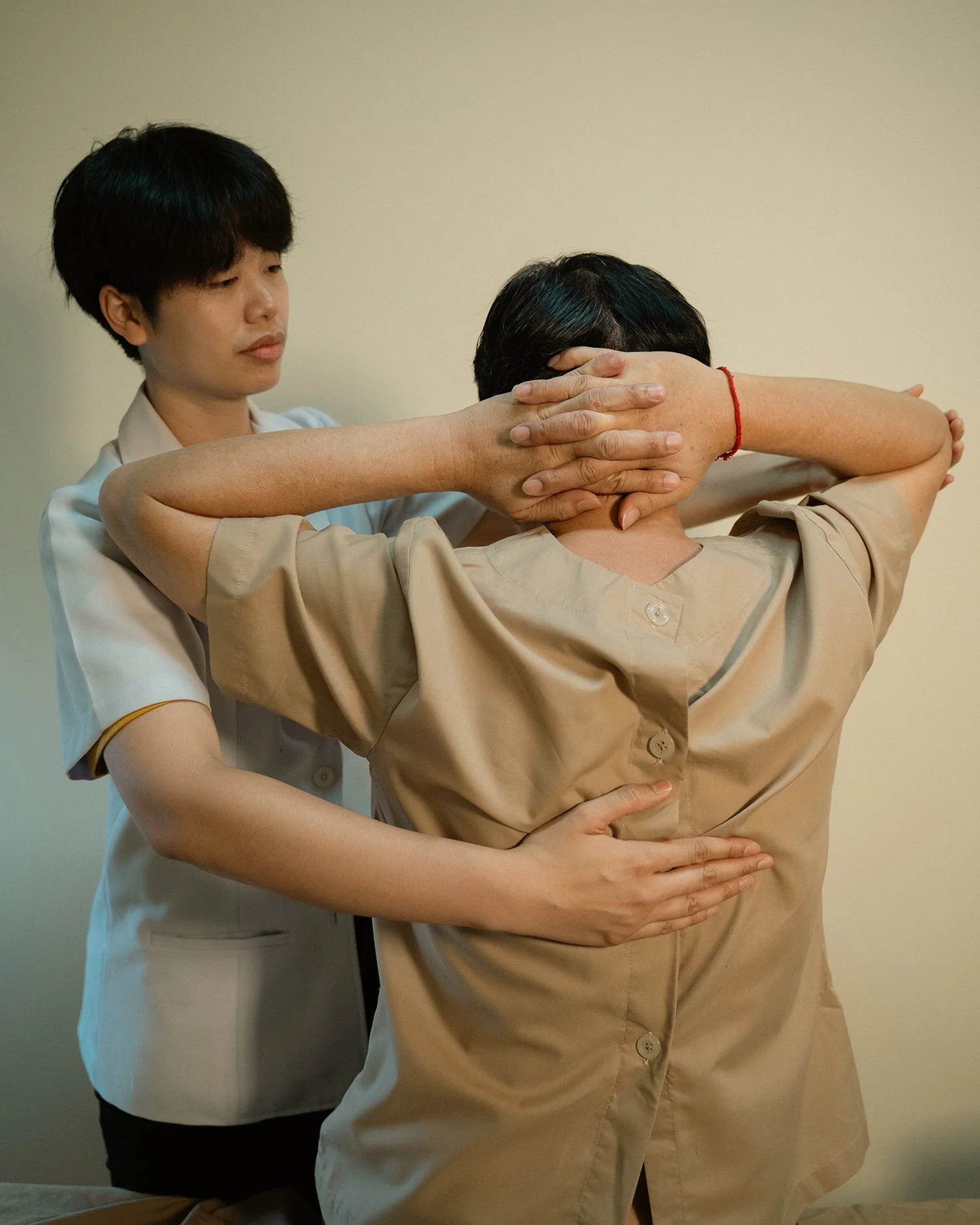
The Schroth method is a well-known approach to Physiotherapeutic Scoliosis Specific Exercises (PSSE), supported by international research. The exercise frequency and positions are tailored by a physiotherapist based on individual assessments and are divided into three phases.
Foundation Phase: Focuses on developing self-awareness of body posture related to scoliosis. Patients typically need to see a physiotherapist 2-3 times per week for 1-3 months to learn how to control their bodies and achieve a balanced position.
Practice Phase: Patients gain better body control and are prescribed corrective exercises to perform at home daily. Physiotherapy sessions are reduced to once a week or every two weeks. This phase lasts 1-5 months, depending on the patient’s condition and growth.
Follow-Up Phase: For patients who have completed their growth and have a curvature over 30 degrees, follow-up appointments are scheduled to monitor posture and exercise accuracy, including X-rays as needed. These follow-ups occur monthly, quarterly, or biannually, depending on the severity of the curvature.
Ensuring consistency in exercises, practicing with proper technique, and incorporating posture awareness into daily routines are key. Regular check-ins with an experienced physiotherapist are crucial for sustained improvement
References
Negrini A, Verzini N, Parzini S, et al. Role of physical exercise in the treatment of mild idiopathic adolescent scoliosis. Review of the literature. Eur Med Phys 2001; 37: 181–190.